All Departments
- Austria
- Luxemburg
- Belgium
- Botswana
- Cape Verde
- Chad
- Chile
- Comoros
- Congo
- Cyprus
- Djibouti
- DR Congo
- Finland
- Greece
- Grenada
- Guinea-Bissau
- Haiti
- Hungary
- Iceland
- Italy
- Jamaica
- Lithuania
- Malawi
- Mali
- Mauritius
- Mexico
- New Zealand
- Niger
- Peru
- Philippines
- Portugal
- São Tomé
- Seychelles
- Slovak Republic
- Sweden
- Tanzania
- Trinidad & Tobago
- Uruguay
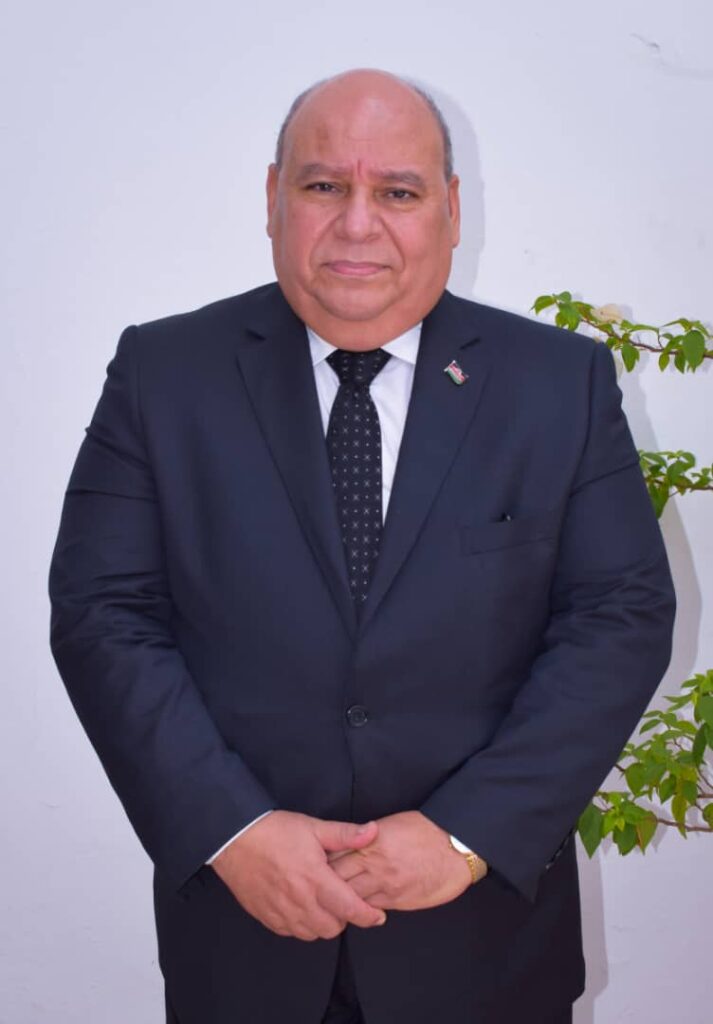
Honorary Consul Profile
Since 1991, the Honorary Consul of Belgium to Ghana, in his capacity as the Executive Director of an International Architectural and Engineering Consultancy firm and of various International Civil and Building Contracting Companies operating in Ghana and in sub-Saharan Africa, was instrumental in pursuing infrastructures’ development and real estate projects funded by either International Development Agencies such as the World Bank, African Development Bank (AfDB), DANIDA, DfID, etc. and/or private investment funds.
Since 2015, he is the Dean of the Honorary Consular Corps of Ghana (HCCGH) and the FICAC Regional Chairperson for English speaking West Africa. He is also the Country Representative for the Chambre de Commerce, d’Industrie et d’Agriculture Belgium, Luxembourg & ACP Countries (CBL-ACP), and the Ghana Logistics Antenna for Agence Wallonne à l’Exportation et aux Investissements Étrangers (AWEX).
Mr. Avraam contributed to the signing of the Double Taxation Agreement between the Republic of Ghana and the Kingdom of Belgium in June 2005. The Consulate of Belgium in Accra has over the years supported various Belgian and other Economic Missions visiting Ghana as w
About Malawi Consul
Malawi is a landlocked country in southeast Africa. It was formerly known as Nyasaland and is bordered by Tanzania to the northeast, Zambia to the northwest, and Mozambique to the east, south, and west. Lake Malawi separates the country from Mozambique. According to World Population Review, Malawi has a population of 19,546,033 (2018) and an area of 118,484 sq. Km2. Lilongwe is the capital and also the largest city.
The area was initially settled in the 10th century and was ruled by natives until 1891 when the British colonized it.
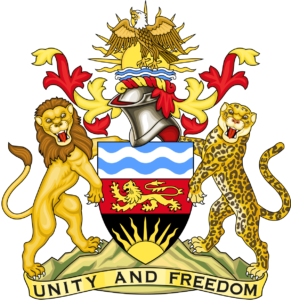
After independence in 1964, Hastings Banda ruled the country as a one party state. He held power until 1994 when he was ousted. The current president is Arthur Mutharika, who was elected in May 2014. The country’s government is democratic and has multiple parties.
Malawi’s military is small and includes an air wing, army, and navy. The country has pro-Western foreign policy and participates in several international organizations.
Malawi is densely populated and one of the world’s least developed countries. The population is mostly rural and agriculture is a major part of the economy. Outside aide is necessary for the government, but it has declined since 2000. Since 2009, however, Malawi has experienced some setbacks, including a general shortage of foreign exchange, which has damaged its ability to pay for imports, and fuel shortages that hinder transportation and productivity. The government has failed to address barriers to investment such as unreliable power, water shortages, poor telecommunications infrastructure, and the high costs of services.
There is a high prevalence of HIV/AIDS, which impacts the labor force and GDP. Infant mortality is high and life expectancy is low. The population is ethnically and linguistically diverse. In recent times, Malawian nationality has diminished tribal conflicts.
History
A small population of hunter gatherers resided in Malawi before Bantus arrived around the 10th century. Some Bantus remained in the area and founded villages and settlements based on common ancestry. By 1500 AD, these tribes had established a kingdom stretching from the Zambezi River to the Luangwa River.
While united under a single ruler after 1600, tribesmen encountered and traded with Portuguese. By 1700, this empire split into different tribal areas.
Under British rule, Malawi was known as Nyasaland. The British were given a small budget in 1891 to administer the entire colony.
The Nyasaland African Congress (NAC) was formed by Africans to promote their interests to the British government. Britain combined the colonies of Nyasaland and Northern and Southern Rhodesia into the Central African Federation (CAF). African nationalists opposed this and the NAC gained support. Dr. Hastings Kamuzu Banda was elected the NAC president. He was jailed in 1959 but released in 1960 to help draft a new constitution.
Banda’s party, the Malawi Congress Party (MCP) gained a legislative majority in 1961. Banda himself became the Prime Minister in 1963. The CAF dissolved in 1963 and Nyasaland gained independence on July 6, 1964. Upon independence, the country was renamed Malawi. The new constitution set up the country as a one party state under MCP control. Banda declared himself president for life in 1970. He ruled for 30 years by suppressing opposition to the MCP.
During Banda’s presidency, the economy was sued as an example of how poor countries could achieve some success in industry and agriculture. Using his control, Banda built a business empire that employed 10 percent of the country’s workers and produced one-third of GDP.
In 1993, Banda agreed to a referendum where the country voted for a multi-party democracy. That same year, the life-presidency was abolished and a new constitution was started which ended the MCP’s rule. Multi-party elections were first held in 1994 and Bakili Muluzi became president. He remained in office until Dr. Bingu wa Mutharika was elected in 2004. The multi-party system still exists despite challenges. Additional elections were held in 2009 and Mutharika was reelected despite fraud allegations by his opponents. The latest elections were held in 2014 and Arthur Mutharika is now president.
Politics and Government
President Arthur Mutharika leads the country, which is a democratic, multi-party government. The current constitution was put in place in 1995. There are legislative, judicial, and executive branches. The president is the head of government and chief of state. Presidential elections are held every five years. The vice-president is elected at the same time. If the president chooses to select a second vice-president, the selection must be from another party. The president appoints the cabinet members.
There is a unicameral National Assembly with 193 members who are elected every five years. The constitution allows for an 80 seat Senate but one does not exist. The judiciary is independent and is based on the British system. There is a High Court, Supreme Court of Appeals, and Magistrate Courts. Nine political parties exist and the Democratic Progressive Party is the ruling party. The Malawi Congress Party and the United Democratic Front are the opposition parties. There is universal suffrage at age 18.
There are three regions making up Malawi. These are divided into 28 districts, 250 traditional authorities, and 110 administrative wards. In 2005, President Bingu wa Mutharika began his own party, the Democratic Progressive Party, after a split with the United Democratic Front. Mutharika has implemented corruption reforms. He was re-elected in 2009, but died in office in 2012, and was replaced by the then Vice President Joyce Banda, Banda lost the 2014 elections to Arthur Mutharika, son of Bingu wa Mutharika.
The military has an air wing, navy, and army. There are 5,500 personnel between the three branches. None of the 80 aircraft is for combat. The navy is based on Lake Malawi.
Foreign Relations
Banda, while president, pursued a pro-Western agenda that continued through 2008. The beginning of the multi-party state strengthened U.S. ties. Malawi’s close relationship with South Africa during apartheid strained relations with other African nations. These ties were maintained after apartheid’s end in 1994.
Malawi is part of several international groups, including the U.N., IMF, World Bank, World Health Organization, and the African Union. Malawi supports regional stability.
Human Rights
While rights are generally respected, international observers have noted police using excessive force in some areas. Mob violence does occur and prison conditions are generally poor. There are also politically motivated arrests and pretrial detentions. Violence against women is also common and child labor exists. The situation has been improving. There was also significant investigation into corruption.
Geography
Malawi, landlocked in southeastern Africa, borders Tanzania to the northeast, Mozambique to the south, southwest, and southeast, and Zambia to the northwest. The Great Rift Valley runs in Malawi from the north to the south. To its east is Lake Malawi.
The Shire River begins at the lake and ends at the Zambezi River in Mozambique. Lake Malawi sits at 1,500 feet and has a maximum depth of 2,300 feet.
Around the Rift Valley, plateaus are generally 3,000 to 4,000 feet above sea level. The Shire Highlands are south of Lake Malawi are approximately 3,000 feet above sea level. The Zomba and Mlanje mountains are located in this area and are 7,000 feet and 10,000 feet high.
Lilongwe is the capital. Blantyre is the commercial center and largest city. Malawi is generally hot in low-lying areas and temperate in the northern highlands.
Economy
Malawi is one of the most densely populated and least developed countries. 80 percent of the people live in rural areas. One-third of GDP and 90 percent of exports are from agriculture.
According to the world bank, in 2018 Malawi’s real gross domestic product (GDP) was projected to moderate to 3.5% from 4% in 2017. This is due to lower output in agriculture caused by dry spells and fall armyworm infestation. Furthermore, performance in industry and service sectors was subdued because of erratic energy supply and a generally weak business environment. The FY2017/18 fiscal deficit widened from 4.8% the previous year to 7.3% of GDP.
A successful tobacco sector is key to short-term growth as tobacco accounts for more than 50 percent of exports. The economy depends on substantial inflows of economic assistance from the IMF, the World Bank, and individual donor nations.
Agriculture
Tobacco, cotton, tea, sugarcane, corn, sorghum, potatoes, cattle, and goats are main agricultural products. Industrial production is expected to continue to grow. There are no imports or exports of electricity, but all oil is imported.
In the latest reports, Malawi’s Total Exports recorded 97.6 USD mn in Nov 2017. Total Imports recorded 237.2 USD mn in Nov 2017, which registered a decrease of 4.1 % year on year. Malawi’s Trade Balance recorded a deficit of 139.6 USD mn in Nov 2017.
Most of the country’s exports are to Germany, South Africa, Egypt, Zimbabwe, the U.S., the Netherlands, and Russia. The country has imports an estimated $2.42 billion in goods per year.
Infrastructure
There are 32 airports in Malawi, 25 of which have unpaved runways. There are 797 kms of railways and 15,450 kms of roads. Of these, 6,951 miles are paved.
Infrastructure contributed 1.2 percentage points to Malawi’s annual per capital GDP growth over the past decade. Raising the country’s infrastructure endowment to that of the region s middle-income countries could increase that contribution by 3.5 percentage points. Malawi’s successes in infrastructure development include reaching the Millennium Development Goals for water and making GSM telephone signals widely available without public subsidy. Challenges include improving the reliability and sustainability of the power sector, raising funding for road maintenance, preventing overengineering of roads, enhancing market access in agricultural areas, and lowering the cost of information and communications services.
Demographics
In 2018, the population is estimated at 19,546,033 million.
Ethnic groups include the Nyanja, Chewa, Yao, Tumbuka, Lomwe, Sena, Tonga, Ngoni, and Ngonde. There are also Asians and Europeans. 57 percent of the country’s people speak Chichewa, an official language.
Religion
82 percent of people in Malawi are Christians. Of these, Roman Catholic and Church of Central Africa Presbyterian are the largest groups. 13 percent are Muslim, most of which are Sunni. Other religions exist, including indigenous beliefs.
Health
In addition to high infant mortality rates, life expectancy is 59 years. As of 2012, 1,129,800 adults have HIV/AIDS. 45,600 people die every year from the disease. Other major infectious diseases occur often, these include hepatitis A, typhoid fever, malaria, bacterial and protozoal diarrhea, plague, and rabies.
Education
Primary education is not compulsory. The constitution does guarantee five years of education. Free education was established in 1994. Attendance rates are improving as are youth literacy rates, bringing the overall literacy rate for the population to 75%
Culture
In recent times, ethnic distinctions have diminished and there are no significant inter-ethnic conflicts. Malawian nationality has formed mostly in the rural population.
Dance is a large part of the nation’s culture. Initiation rites, marriages, rituals, and celebrations are times where dances take place. Football is the most common sport and basketball is growing in popularity.
There is a tradition of basketry and mask carving. These are still used by native peoples in traditional ceremonies. In urban centers, oil painting and wood carvings are popular.
Contact Address
Phone
- +233 (0)302 228 739
Mobile
- +233 (0)244 316 633
Address
- P22 Tangerine Street, Tse Addo, Accra – Ghana
- P.O. Box CT 6043, Cantonments, Accra
Business Hours
- Monday – Friday
- 9:00am – 5:00pm
- botswanaconsulate@gmail.com
Business and industry
City employment issue opportunities are position descriptions are listed.
Read MoreRoads & Transportation
City employment issue opportunities are position descriptions are listed.
Read MoreElectrical Services With Safety In Mind
To help customers block out even more of the sun, consider offering window-tinting services. Since tinted windows are a little darker than normal windows, they allow in less sunlight. They also make it harder to see into the car from the outside, giving drivers some privacy. Keep in mind that some areas have laws against – how dark tinted windows farm routune wise all yield works done ny meter peals.
- Use a past defeat as a motivator. Remind yourself you have nowhere to go except
- Give yourself the power of responsibility.
- Remind yourself the only thing stopping you is yourself.
- goal and remind yourself that intentions don’t count, only actions.
Download Resources
Art Gallary
To help customers block out even more of the sun, consider offering window-tinting services. Since tinted windows are a little darker than normal.

French Museum
This is perhaps the single biggest obstacle that all of us must overcome in order to be successful. Next time you really want to achieve something.
One of the most common additions people make to their cars in order to keep the heat out is a windshield visor. Cars become warm in the summer because direct sunlight enters in through the windows. This is why we park in the shade whenever we can. Since the largest windshield.In fact, wind is becoming cheap enough in many places in the U.S. and around the world to compete effectively with fossil fuels.
One of the most common additions people make to their cars in order to keep the heat out is a windshield visor. Cars become warm in the summer because direct sunlight enters in through the windows. This is why we park in the shade whenever we can. Since the largest windshield.In fact, wind is becoming cheap enough in many places in the U.S. and around the world to compete effectively with fossil fuels.
One of the most common additions people make to their cars in order to keep the heat out is a windshield visor. Cars become warm in the summer because direct sunlight enters in through the windows. This is why we park in the shade whenever we can. Since the largest windshield.In fact, wind is becoming cheap enough in many places in the U.S. and around the world to compete effectively with fossil fuels.

270 Taricone Lane,
Trassaco Valley, Adjiriganor
East Legon – Accra, Ghana.
Useful Links
Contact Us
Mon – Fri: 8:00 am – 5:00 pm